
Birmingham Design Festival 2026: My Top Three Talks
Friday 26th June 2026
Early this month, Birmingham Design Festival returned, with creatives from around the world gathering in the UK’s second biggest city for three days packed full of insightful talks, workshops and social events.
This was my third time attending BDF. Every year, I scribble down tons of notes with the intention of writing an article about the festival afterwards. What tends to happen next is I get distracted by other projects and forget about the idea, only to rediscover my notes months later, by which point I struggle to read my own handwriting.
This year, however, I have broken the cycle. I’ve transformed my messy notes into something much neater. Here are my top three talks from BDF 2026…
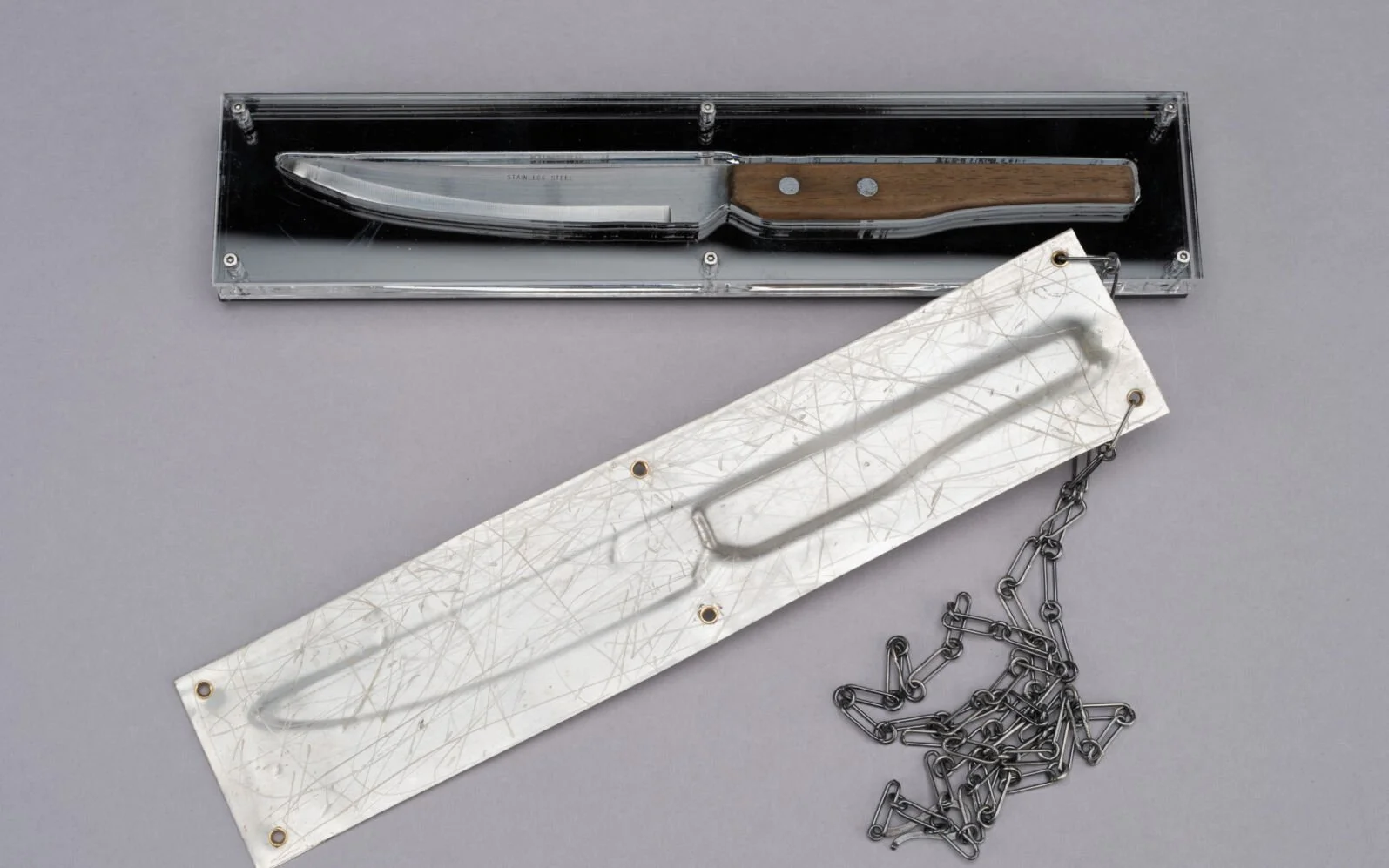
Swords Into Ploughshares: Socially-Engaged Craft
Dauvit Alexander is a Scottish jeweller and educator whose work has pivoted towards activism in recent years. He spoke to us about how craft can be used as a powerful tool for engaging people with socially challenging issues.
The talk centred around Dauvit’s long-term project Swords into Ploughshares: Knives to Jewels, which encouraged people to think differently about knife crime. This collaborative project invited makers from around the world, both emerging and established, to repurpose knives into artworks, which were then displayed as part of a touring exhibition.
The exhibition featured a wide array of different objects, with a huge variety in methods, styles and concepts on display. Responses ranged from abstract to literal, traditional to contemporary, practical to playful, and harrowing to humorous. One artist transformed their blade into an alarm to help scare off attackers, while another altered their knife into a blunt utensil for serving food. The breadth of ideas on display showed just how many different conversations could be sparked by this complex yet familiar object.
“All we do is seed some ideas. That’s my role.”
- Dauvit Alexander
My favourite thing about Swords into Ploughshares is the way it rethought the idea of an exhibition. Dauvit and his collaborators didn’t simply put a whole load of artworks in a room and assume that their visual impact would change lives. Instead, they worked with local community groups to host a series of craft workshops inspired by the exhibition. It was in these rooms, while people crafted together, that the important conversations about knife crime and violence (and all kinds of other topics) really started to happen.
The project and Dauvit’s talk made an important point about accessibility to the arts. It’s not enough to just invite people to look at art; everyone should be encouraged to engage with the making process and reap the benefits of creativity as an emotional outlet. When young people in particular have a safe space to make and explore, they are less likely to end up relying on less healthy outlets for their feelings. As the government continues slashing creative education budgets, this final point hit particularly hard.
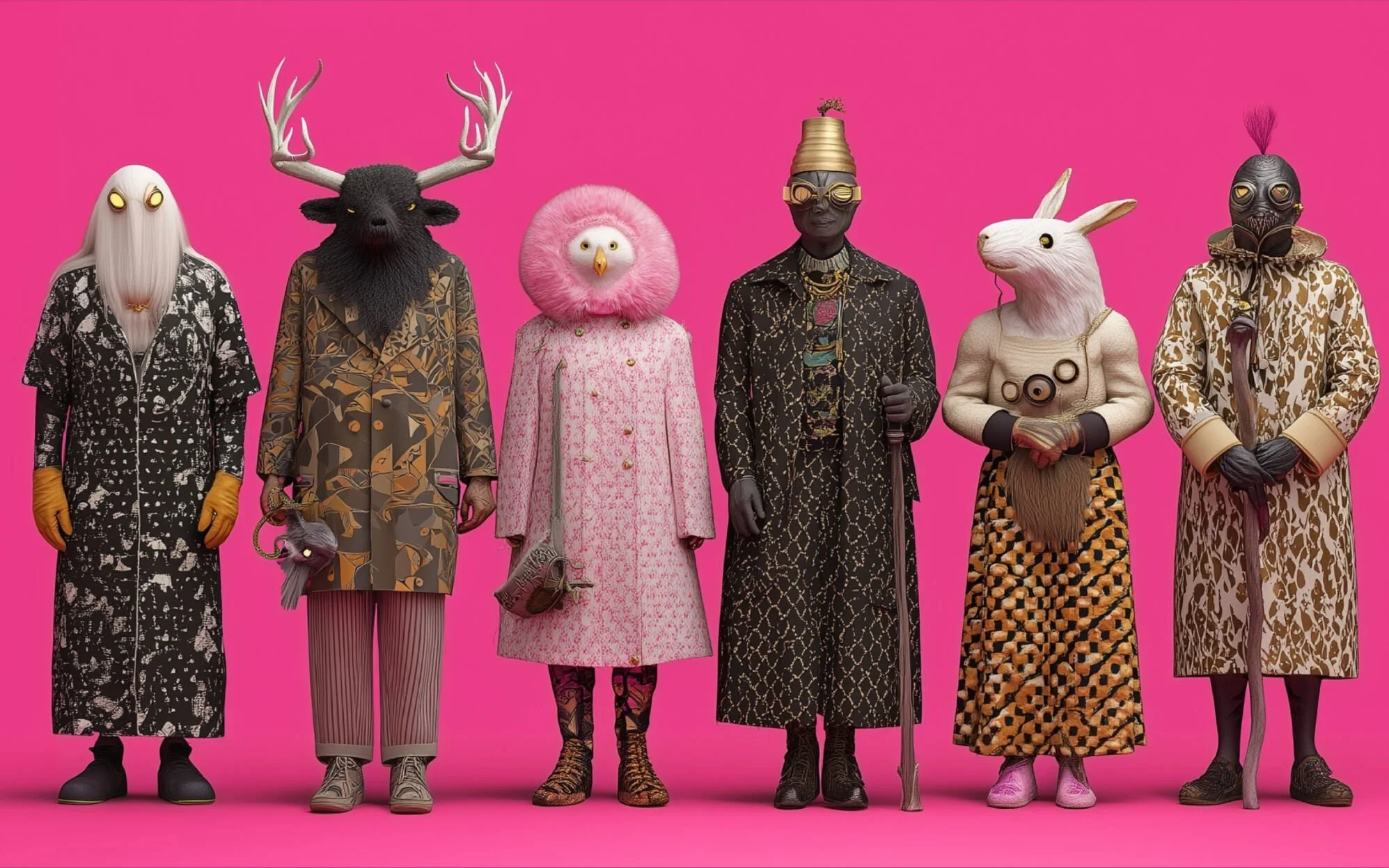
The Freaks Will Inherit The Earth
House of Oddities is an award-winning creative agency which prides itself on being strange. For their talk, co-founders Sachini Imbuldeniya and Darren Smith leant into their oddness and encouraged us to do the same.
If there is one topic the design industry is obsessed with at the moment, it’s Artificial Intelligence. Social media feeds and media outlets alike are awash with people protesting the use of AI and sharing their frustrations and fears about the threat it poses to real creativity. It’s no surprise that this conversation made its way to the stage at BDF. And if you are familiar with the work of House of Oddities, it’s no surprise that they managed to continue this conversation with an enormous amount of humour and wit.
Sachini and Darren explained that if we hope to compete with AI, we need to get weirder. Because AI can never be as freaky as a human being. While humans possess the ability to conjure up genuinely original ideas, AI can only repeat what has been done before. AI is intelligent but not inventive.
“Weird is the compost heap where genius ideas grow.”
- Sachini Imbuldeniya
This ode to staying odd wasn’t encouraging but an empty sentiment - you’re all dead quirky, you’ll be fine. It was practical advice. Being odd is a skill, so we should treat it as one. It’s time to train your brain to make leaps no computer could. Take two completely unrelated ideas and mash them together. Connect the unconnectable. Pour all your most outrageous personality traits, messiest emotions, and ridiculous humour into the things you create.
The first mention of AI during Sachini and Darren’s talk received boos from the audience (directed at the subject, not the speakers, of course). AI provokes a lot of anger in creatives - and rightly so. House of Oddities advise that instead of getting angry, we get freaky. It’s much more fun.
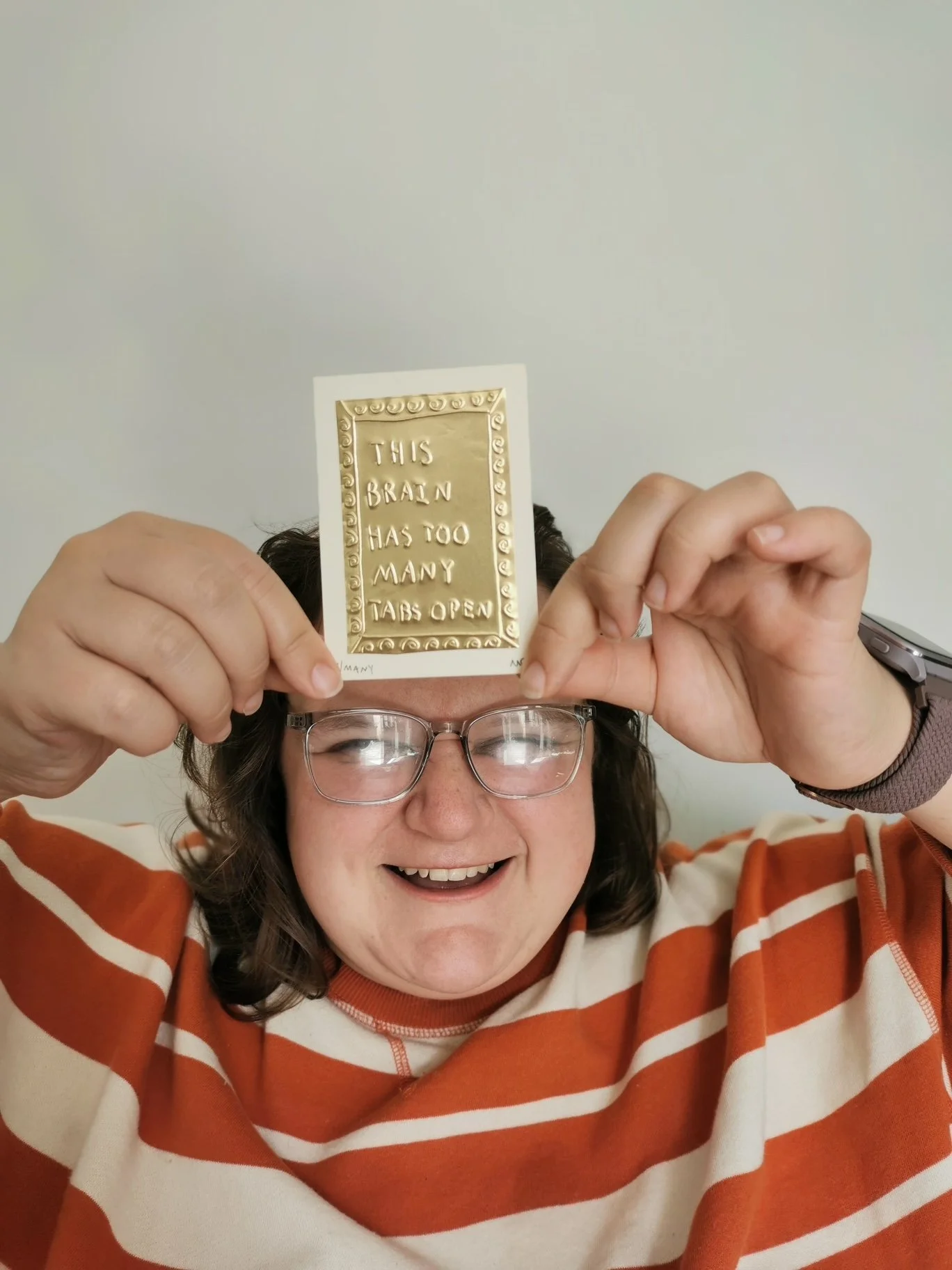
Asked For This Life. Why Does It Keep Changing Me?
Meg Fartharly is a Scottish artist who draws, collages, prints, and embosses sheets of tin, often on a minuscule scale. Her tiny artworks leave a big impression - and so did her outstanding talk.
As soon as I read the description for Meg’s talk, I knew I had to attend, as it would cover two of the topics I am most passionate about: art and anxiety. As someone who writes and illustrates things about mental health myself, I am always keen to learn from and support other creatives who are tackling the subject. I know how vulnerable it can feel to share what’s going on in your head through your work, let alone getting up in front of a room full of strangers to discuss it, so Meg had my admiration before she even began.
There is an equal measure of vulnerability and wit in Meg’s work, which features quotes like “This brain has too many tabs open”. In her talk, she spoke with honesty and humour about how overwhelming she had found turning her passion into a profession.
“I think I’ve built a career out of things I don’t know how to say out loud.”
- Meg Fartharly
Meg shared how, ever since she was a child, making had offered her a sense of escapism. She has always used making as a way of exploring what goes on inside her head and expressing the things she can’t quite find the words for. When she started sharing her creations with the world, her online popularity grew rapidly, and so did her business. She was forced to start thinking of her creations as products, and suddenly, the creative therapy she had long relied on was gone. She has been trying to recentre herself and reconnect with her playful, carefree inner child ever since.
Like many of the best talks I have been to in the past, Meg’s message was pro-self-compassion and anti-hustle-culture. In an industry where there is often so much pressure to move faster, push through, and keep growing, it’s calming to hear someone promoting a different pace. We don’t all need to grow a business that is big and loud. We can, instead, nurture something that is small and quiet but speaks to the right people.
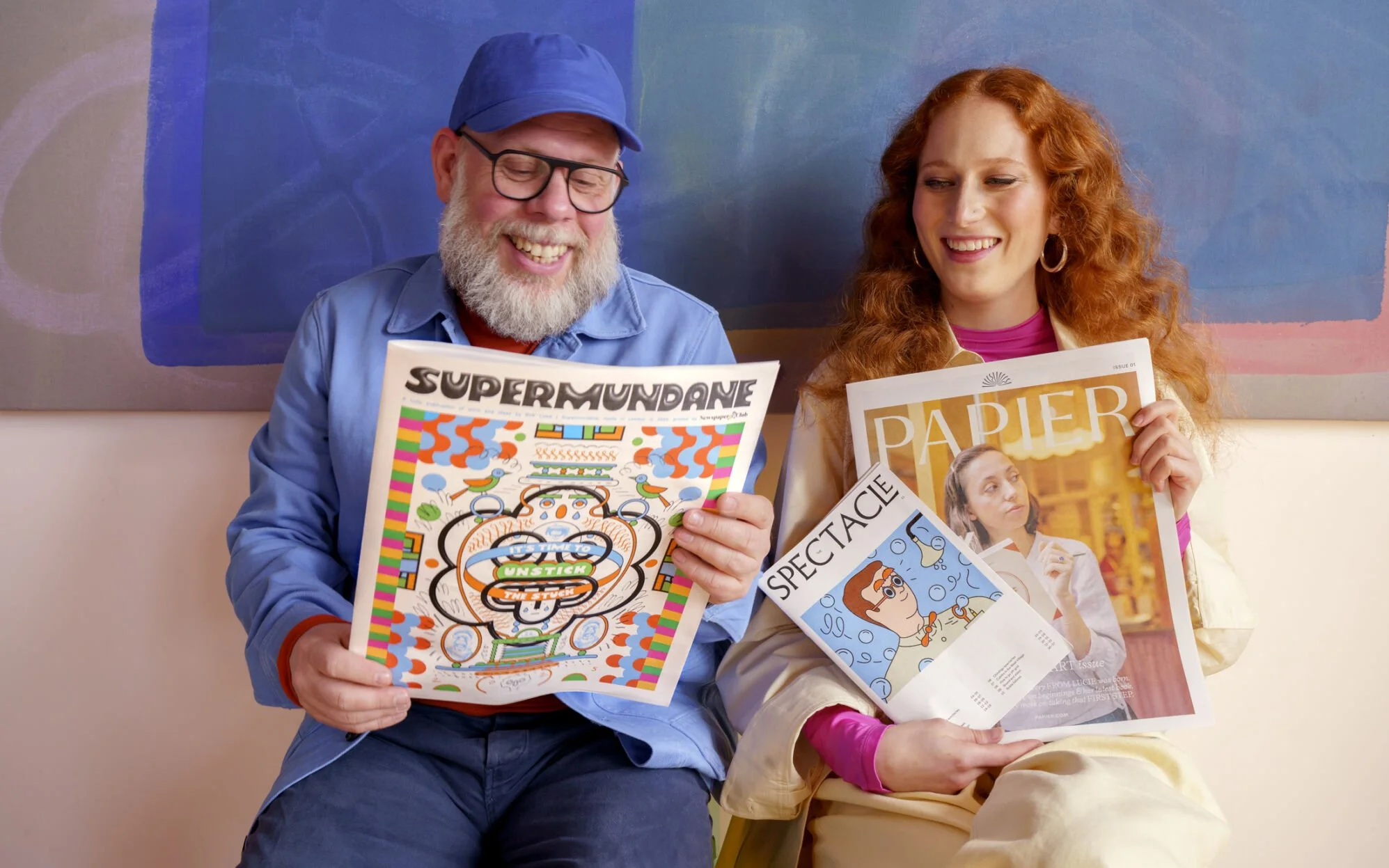
Kaye Symington: Print Is Not Dead… Again
Okay, I know I said I was picking my top three talks… but we have time for one more, right? This is just a quick one, I promise. I didn’t take many notes during Kaye Symington’s talk, not because it wasn’t as good as the others, but because I was just enjoying hearing Kaye speak about her love of print so much - and looking at all the beautiful examples she shared.
Inspired by her work with Glasgow Print Fair and Newspaper Club, Kaye talked us through all the things print is - and will always be. She spoke about how print is an escape, community, rebellion and pure joy. It was lovely spending a bit of time celebrating our love of print. I’m sure I’m not the only one who left the talk with a head full of new print project ideas.
“There always seems to be that connection with a community beyond themselves, which I think is really special.”
- Kaye Symington
The Human Side of Design
I am glad I actually took the time this year to turn my notes into something a little more legible because it has helped me realise: all of my favourite talks from BDF 2026 were about the human side of design. Yes, the talks were all about design, but really, they were about feelings.
Dauvit Alexander spoke about feeling safe enough to open up while crafting alongside new friends. Sachini Imbuldeniya and Darren Smith spoke about feeling scared for the future but proud of their freakiness. Meg Fatharly spoke about feeling overwhelmed and using that feeling to help others feel seen. Kaye Symington spoke about feeling connected to a community through beautiful pieces of print.
In their own way, all of these talks highlighted how important the human side of design is. Gathering together for three days of discussing beautiful things, why we make them and how they make us feel is yet another thing the robots could never do.
Now feels like the perfect moment to thank the brilliant humans who organise Birmingham Design Festival - Daniel Alcorn, Luke Tonge and their incredible team of volunteers! BDF really is a rare gem in the design calendar, and I’m grateful to have it on my doorstep.